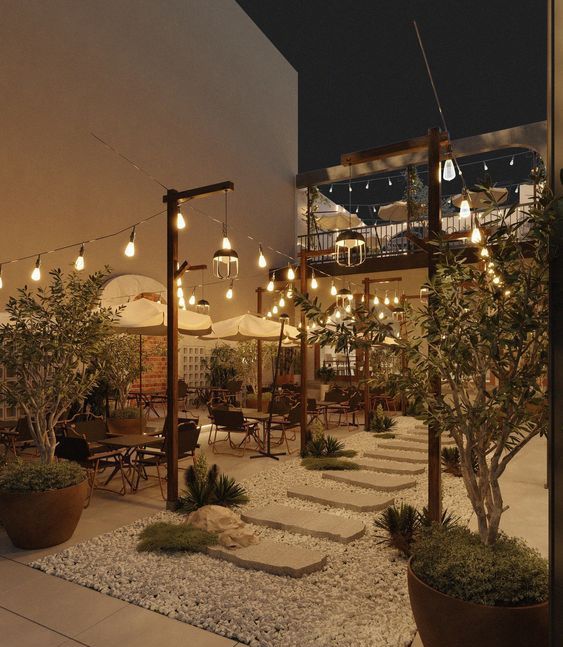
In 2025, outdoor restaurant design is more than just an aesthetic choice — it’s a lifestyle statement. As diners increasingly crave comfort, connection, and ambiance, open-air dining spaces have become the heart of the modern restaurant experience. From soft lighting and sustainable materials to lush greenery and minimalist furniture, outdoor restaurants now reflect a balance between luxury and nature.
This article explores the latest trends in outdoor restaurant architecture, highlighting how thoughtful design can elevate a brand, attract more customers, and create a memorable dining atmosphere.
1. The New Definition of Outdoor Dining
Gone are the days when outdoor seating meant a few plastic tables and chairs. Today’s open-air restaurants are designed with intentional beauty and comfort. The modern outdoor patio blends architecture, landscape, and lighting to form a cohesive experience.
The restaurant in the image perfectly captures this trend — sleek wooden panels, warm golden lights, and natural trees merging with the dining area. Such designs are not only visually appealing but also create an emotional connection with guests, making them feel relaxed and welcomed.
2. Sustainable and Natural Materials
Sustainability continues to drive restaurant design in 2025. Eco-friendly materials such as reclaimed wood, bamboo, stone, and recycled metal are now the foundation of modern patios.
Restaurants are increasingly integrating:
– Wooden cladding and seating for warmth and comfort.
– Planters and vertical gardens that improve air quality.
– Energy-efficient lighting systems, including LED strips and solar-powered bulbs.
These elements not only reduce environmental impact but also appeal to conscious consumers who value green living and authenticity.
3. Lighting: The Mood Creator
Lighting has evolved into a powerful storytelling tool in outdoor dining spaces. The golden glow seen in the image above demonstrates how soft string lights and warm LEDs can instantly transform a simple patio into a cozy and romantic setting.
In 2025, restaurants are using lighting in three strategic ways:
1. Ambient lighting for a relaxing atmosphere.
2. Accent lighting to highlight architectural elements or trees.
3. Task lighting near dining tables to ensure visibility without harshness.
The goal is simple: create an immersive experience that feels intimate yet open — ideal for evening dining, events, or casual meetups.
4. Integration of Nature: Biophilic Design
One of the strongest architectural trends of 2025 is biophilic design — connecting people with nature through natural elements. Trees, plants, and natural textures are seamlessly integrated into restaurant spaces to boost well-being and comfort.
Restaurants are now designing patios around existing trees, just like the one in the image, where branches extend gracefully over diners. This connection to nature provides not only shade but also a sense of serenity, making guests feel grounded and peaceful.
5. Comfort and Functionality in Outdoor Spaces
Modern outdoor restaurants prioritize comfort, privacy, and flexibility. Gone are the cramped seating layouts — now, open patios feature:
– Spacious seating arrangements for social distancing and comfort.
– Built-in sofas and cushioned benches that encourage longer stays.
– Modular furniture that can be rearranged for events or private dining.
Designers are also using smart weatherproofing, like retractable roofs and side panels, to ensure the space remains usable year-round — rain or shine.
6. Minimalism Meets Luxury
A defining aesthetic of 2025 restaurant design is minimalist luxury. This means clean lines, simple color palettes, and high-quality finishes that create elegance without excess.
In the featured restaurant, sleek black frames, light wood textures, and uniform lighting bring a modern yet inviting look. The combination of minimalism and warmth ensures that guests focus on what truly matters — good food, good company, and a peaceful atmosphere.
7. Technology and Smart Integration
Innovation is reshaping outdoor restaurant design. Many modern spaces now include smart lighting systems, built-in speakers, and temperature sensors for ultimate comfort.
Restaurants also use QR code menus, digital reservation systems, and wireless charging tables, blending functionality with futuristic style. This seamless integration of technology not only enhances efficiency but also creates a “wow” factor that guests remember.
8. Social Media-Ready Spaces
In the era of Instagram and Pinterest, aesthetic design equals free marketing. Restaurant owners now intentionally design corners and seating areas that photograph beautifully — with perfect lighting, symmetry, and texture.
The restaurant in the image is a perfect example: every detail, from the patterned pavement to the warm ceiling lights, invites guests to take pictures and share their experience online. This visual appeal can greatly increase organic reach and attract new customers.
9. Creating Experiences, Not Just Meals
Modern diners no longer visit restaurants only for food — they come for experiences. A well-designed outdoor space allows people to feel part of a community while enjoying nature, music, and ambiance.
Architects and designers now focus on:
– Storytelling through space — each corner tells a visual story.
– Flow and movement — ensuring comfort and accessibility.
– Cultural expression — using local materials or art to create identity.
When architecture and hospitality merge, the restaurant becomes more than a business — it becomes a destination.
Conclusion
Outdoor restaurant design in 2025 represents the perfect balance between nature, architecture, and emotion. Whether it’s the soft glow of lights, the warmth of wood, or the refreshing greenery, every design choice aims to enhance the dining experience.
The future of hospitality lies in creating spaces that invite connection — with people, with food, and with the environment. Restaurants that embrace modern outdoor design not only stand out visually but also offer guests something truly unforgettable: a space where comfort, beauty, and sustainability come together under the open sky.